Center for Heat Preparedness at Arizona State University
Translating research and exchanging knowledge solutions to protect people, infrastructure and economies from extreme heat
A living laboratory for extreme heat
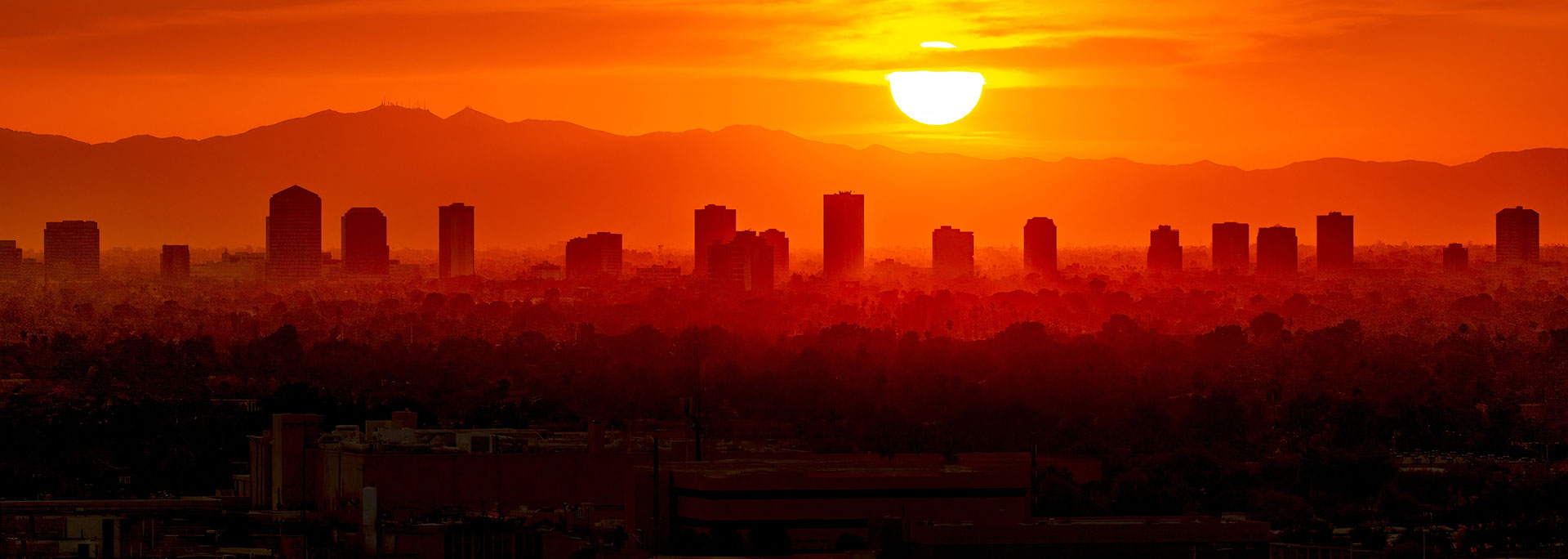
Based in Phoenix, Arizona — the hottest metropolitan area in the United States — the Center for Heat Preparedness at Arizona State University leverages its location to understand risk, exchange knowledge, enhance readiness and meet the growing challenge of extreme heat.
The center unites researchers, community organizations, industry partners and public agencies to create solutions together. Our collaborative approach aims to secure the health and safety of people and mitigate threats to infrastructure and the economy. Supported by a congressionally directed spending appropriation, the center is developing standards, policy frameworks and solutions to combat extreme heat.


What we do
Extreme heat affects every system that people depend on. The center focuses on four interconnected domains where research can improve resilience, reduce risk and strengthen preparedness: public health, energy, infrastructure and the economy. Our work draws on the expertise of more than 170 researchers across 9 colleges of ASU from disciplines such as economics, engineering, medicine, public policy, social sciences, sustainability, urban planning and other disciplines.
Public health
Extreme heat is one of the leading causes of weather-related deaths in the nation, and it’s only getting worse. We study heat-related illness and mortality, identify vulnerable populations, examine occupational exposure, and develop strategies that protect health and improve quality of life.
Energy systems
Extreme heat places extraordinary demands on the electric grid, increasing the risk of outages when reliable power is most critical. We study grid resilience, electricity demand and infrastructure performance to help strengthen energy systems during extreme heat events.
Transportation and the built environment
The infrastructure society depends on strains and may even break under the stress of extreme heat as roads buckle, rails warp and cables melt. We study how heat affects transportation systems and operations, construction materials and urban microclimates while advancing solutions such as green infrastructure and more heat-resilient design.
Economic security
Extreme heat affects economies at every level — from national productivity to household finances. We examine impacts on workforce performance, supply chains, insurance and risk management while studying how energy costs and housing affordability influence individual exposure and resilience.
What we deliver
Through congressionally directed funding, we are translating ASU’s deep expertise in extreme heat into new standards, ready-to-go policy materials and actionable solutions for the nation.

Scientific standards
We identify and verify standards that help organizations measure heat exposure, assess risk and improve decision-making. These standards will support workforce safety, emergency management and infrastructure planning by providing consistent, evidence-based guidance.
Policy frameworks
We translate research into much-needed, ready-to-use policy frameworks that governments, employers and institutions can adopt to strengthen heat preparedness. Long-term goals are to create resources for institutional response and employer compliance as well as economic models that link the health, energy, transportation and infrastructure costs of extreme heat.
Solutions
Research has the greatest impact when it moves beyond discovery and influences decisions and behavior. We transform scientific knowledge into practical tools, actionable resources and public-facing solutions that help communities anticipate, prepare for and respond to extreme heat where we live, work and play.
Contact us to collaborate
Help us meet the challenges of extreme heat and safeguard people, infrastructure and business.